How Freezing Temperatures Cause Major Damage
When temperatures drop below freezing, small issues can quickly turn into costly disasters. From burst pipes to widespread water damage, winter-related losses are some of the most common calls emergency restoration companies receive.
Understanding how freezing causes damage, and how to reduce your risk, can help protect your property this winter.
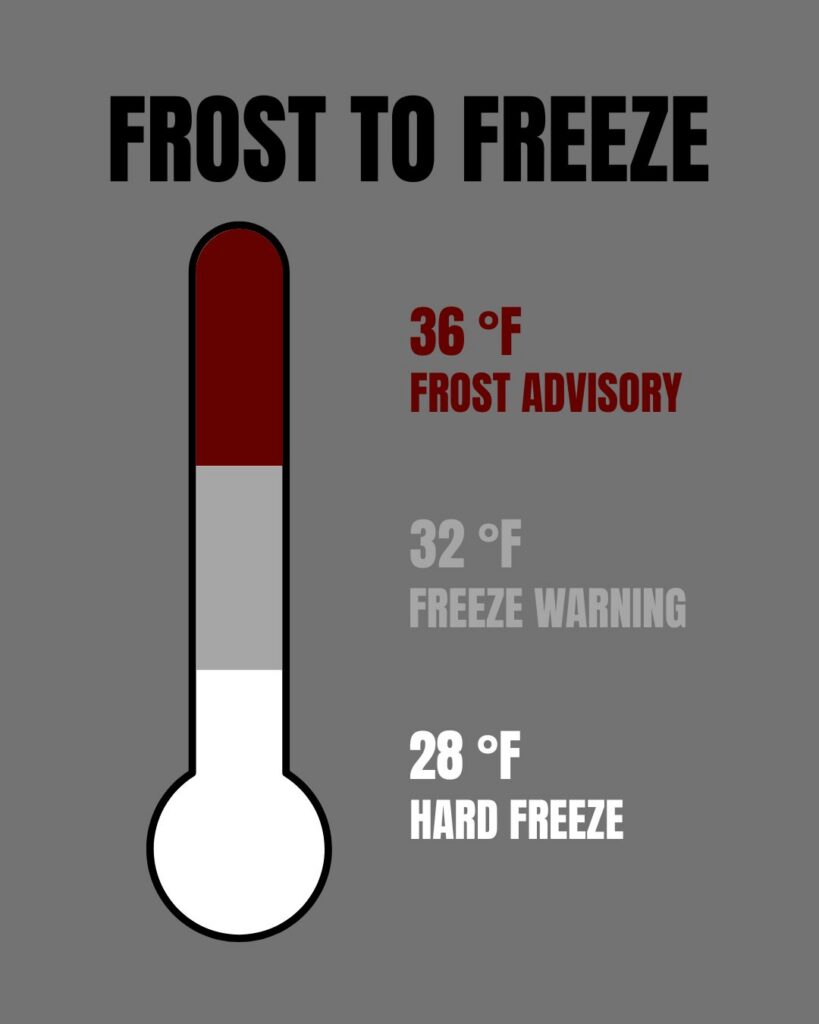
How Freezing Temperatures Damage Pipes
When water freezes, it expands. Inside plumbing lines, that expansion increases pressure, often beyond what pipes can handle. This is especially dangerous in:
- Uninsulated pipes
- Pipes in exterior walls
- Basements, crawl spaces, attics, and garages
- Vacant or rarely used properties
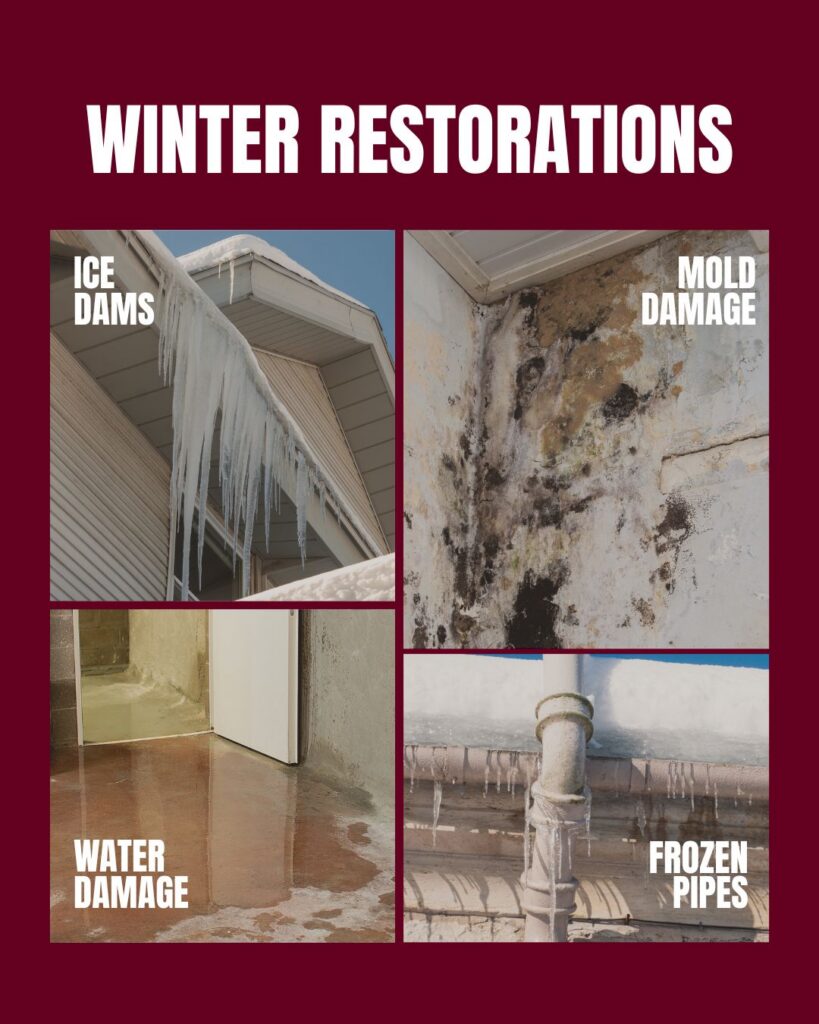
Pipes don’t always burst while frozen. Many failures occur during thawing, when pressurized water suddenly escapes through cracks, causing rapid flooding. This can lead to:
- Soaked drywall and insulation
- Damaged flooring and carpeting
- Electrical hazards
- Structural damage
- Mold growth within 24-48 hours
The Chain Reaction of Water Damage
Once a pipe burst happens, water spreads quickly. Cold weather slows evaporation, allowing moisture to linger longer inside walls, floors, and insulation. Without immediate emergency restoration services, lingering moisture can lead to:
Ice Dams and Freezing-Related Roof Damage
Freezing temperatures also play a major role in ice dam formation. When snow melts on a warmer section of the roof and refreezes near the eaves, ice dams form. These block proper drainage, forcing water back under shingles and into the home.
This can cause:
- Ceiling stains and leaks
- Damaged insulation
- Rotting roof decking
- Hidden mold growth
Ice dam damage often goes unnoticed until interior signs appear – by then, the damage is already extensive.
Freezing Weather Also Increases Fire Risks
Winter weather also increases fire risks as heating equipment runs more frequently. Common winter fire risks include:
- Improper use of space heaters
- Fireplace or chimney blockages
- Overloaded electrical circuits
- Frozen or blocked exhaust vents
Fire incidents often result in both fire and water damage, as sprinkler systems or firefighting efforts leave properties saturated and in need of professional restoration.
How to Reduce Your Risk During Freezing Weather
While not all winter disasters are preventable, taking proactive steps can significantly reduce your risk:
- Insulate exposed pipes and seal air leaks
- Keep indoor temperatures consistent, even in vacant spaces
- Allow faucets to drip during extreme cold
- Disconnect and drain exterior hoses
- Clear snow buildup from roofs when safe to do so
- Schedule chimney and heating system inspections
Preventative measures help, but unexpected damage can still occur.
What to Do If Freezing Causes Water or Property Damage
If you experience burst pipes, water intrusion, or freezing-related damage:
- Shut off the water supply immediately if possible
- Avoid electrical hazards in affected areas
- Call DAI Restore immediately
Freezing temperatures can turn minor issues into major disasters fast. An experienced emergency restoration team can quickly assess damage, stop further loss, and restore your property safely and efficiently.
If winter weather causes water, fire, or structural damage to your home or business, don’t wait. Call DAI Restore: 401-828-0050.